
New York ESA Letter for Apartments
Renting an apartment, co-op, or condo in New York with an emotional support animal? New York layers state and city human-rights protections on top of the Fair Housing Act, and many buildings review requests through a board or managing agent. A real ESA letter comes from a New York-licensed provider after an evaluation.
Start for as low as $32.25

How does an ESA letter work for a New York apartment?
For a New York apartment, an ESA letter supports a reasonable-accommodation request under the Fair Housing Act, the New York State Human Rights Law, and — in NYC — the NYC Human Rights Law. You send your managing agent or board a short written request plus a letter from a provider licensed in New York, written after a real evaluation.
Approved assistance animals are generally exempt from no-pet policies, pet rent, and pet deposits — even in co-ops and rent-stabilized buildings — but each request is reviewed individually, often by a board, and no service can guarantee a building's decision.
What's different in New York
New York-specific factors for apartment ESAs
New York adds extra tenant protections, but its co-op and board culture means documentation gets a close read. Here's what shapes a New York request.
Layered housing protections
New York renters are covered by the federal Fair Housing Act plus the New York State Human Rights Law — and, in the five boroughs, the NYC Human Rights Law. Together they protect assistance animals in most housing.
Co-ops, condos & rent-stabilized
NYC housing is full of co-ops, condos, and rent-stabilized buildings with strict no-pet clauses. A reasonable-accommodation request asks the building to make an exception — reviewed individually, often by a board or managing agent.
Building management & boards
Many requests go through a managing agent or co-op/condo board rather than an individual owner. A clear, verifiable letter helps that review move along calmly.
Providers expected to be verifiable
New York landlords and boards are encouraged to confirm a provider's license. A letter naming a New York-licensed provider, with a license number and a verification path, is far less likely to be questioned.
See the broader state overview on our ESA letter in New York page.
For renters
What New York renters should prepare
A short accommodation request
A brief written request to your managing agent or board stating you have a disability-related need and are asking for an exception to the no-pet policy. Keep medical detail out of it.
A verifiable provider letter
Your ESA letter naming the New York-licensed provider, their license type and number, the issue date, and a way to verify it.
Know who reviews it
Find out whether your building routes requests to a managing agent, a co-op/condo board, or the owner, and submit it through the channel they actually track.
Copies for your records
Keep a copy of what you sent and the date. A clear paper trail helps if a board review is slow or your request stalls.
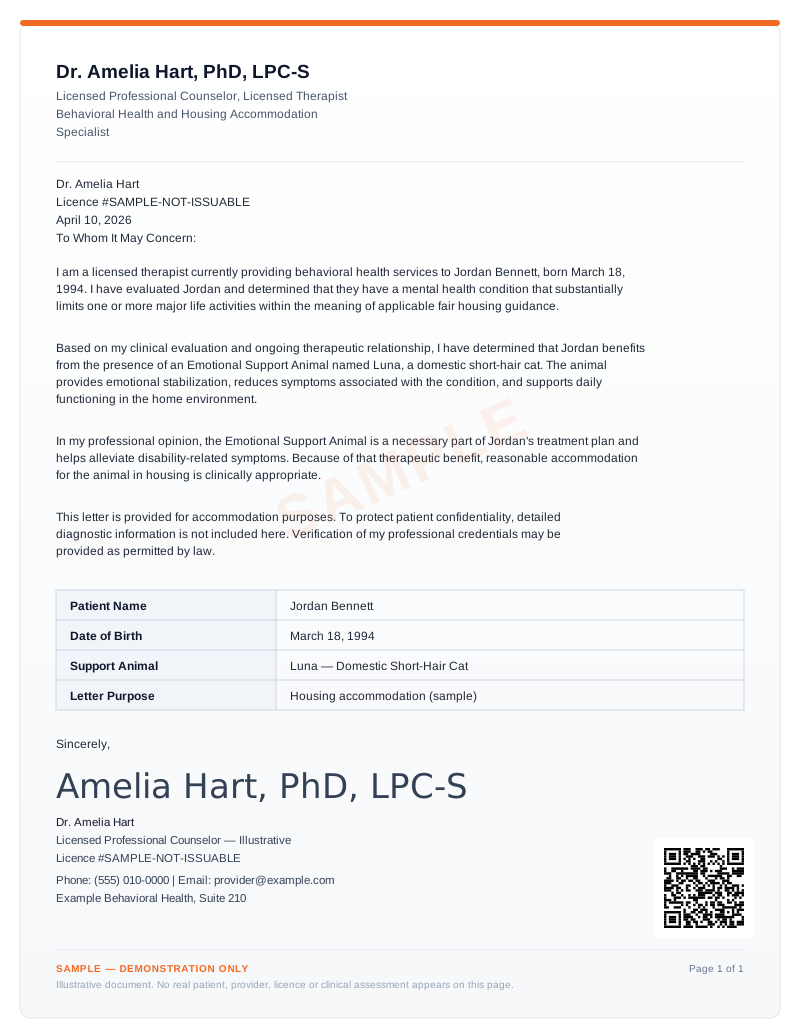
A verifiable letter looks like this — from a licensed provider, with verification details. Sample.
On the building's side
How a New York building or board may review your documentation
General Fair Housing and New York human-rights guidance — not legal advice. Rules can vary by building and locality.
- Confirm the letter comes from a provider licensed in New York and that it is authentic.
- Ask for documentation reasonably supporting the need when a disability isn't obvious.
- Apply the same general building rules (noise, damage, leash) that apply to every resident.
- Decline a specific animal only for a documented, individualized safety or damage reason — not a no-pet policy alone.
See the full landlord ESA documentation checklist and how to verify an ESA letter.

A New York-licensed, verifiable letter reads cleanly to a board
When your letter clearly names a New York-licensed provider with a license number and offers a way to confirm it, a managing agent or co-op board can review your request without you handing over private medical details — and it's far less likely to be questioned.
- Pair the letter with a short written accommodation request.
- No pet registration, certificate, or ID card needed.
- Landlord denial support if a valid request is pushed back.
ESA Letter Pricing
Clear, upfront pricing — from $115
Pay by card, or choose Klarna at checkout — subject to eligibility and Klarna payment terms. A licensed provider reviews your assessment — approval is not guaranteed.
One-time
Valid for 1 year. Pay once, no auto-renewal.
- Licensed provider review
- Money-back if not approved
- Verifiable, housing-ready letter
- Free Pet Care Planner by PawTenant
Annual
Renews automatically. Save vs. one-time every year.
- Licensed provider review
- Money-back if not approved
- Verifiable, housing-ready letter
- Free Pet Care Planner by PawTenant
PawTenant also supports PSD (Psychiatric Service Dog) evaluations for qualifying individuals where clinically appropriate. PSD documentation requires disability-related task training and is different from ESA documentation.
Landlord or HOA need a separate accommodation form? See ESA packages & Reasonable Accommodation pricing.
New York apartment ESA letters: FAQ
A no-pet clause alone is generally not a valid reason to deny an approved assistance animal. New York renters are protected by the Fair Housing Act, the New York State Human Rights Law, and — in NYC — the NYC Human Rights Law. A building can deny a request in limited situations, such as a documented direct threat to safety or substantial damage that can't be reduced, but each request is reviewed individually and acceptance is never automatic or guaranteed.
Ready to request your New York apartment accommodation?
Connect with a New York-licensed provider. If you qualify, you'll receive a verifiable, housing-focused ESA letter for your apartment, co-op, or condo — with a refund if you don't qualify.
Start ESA EvaluationLast reviewed June 17, 2026 · PawTenant editorial team
Keep reading
The national guide to apartment ESA housing requests.
Read moreNew York ESA requirements and how to get a letter.
Read moreWrite the request you send with your ESA letter.
Read moreWhat a landlord or board can and can't ask to review.
Read moreWhen apartment pet fees and deposits may not apply.
Read moreMake sure your letter is real and verifiable.
Read moreNeed PSD documentation instead?
A Psychiatric Service Dog (PSD) is different from an emotional support animal — it involves disability-related task training and is for qualifying individuals. If a service dog fits your situation better, start there instead.
Educational information, not legal or medical advice. PawTenant connects you with licensed mental health providers. Whether an ESA or PSD is appropriate is decided by a licensed provider after a real evaluation — approval is never guaranteed, and a valid letter supports but does not guarantee a landlord’s decision. For your specific situation, consult a qualified professional or your state agency.
Support animal housing rules changed in 2026
HUD's federal enforcement approach changed, but state law, housing type, Section 504, private legal rights, and individual facts may still matter. PawTenant helps customers understand their options through licensed, state-aware support-animal documentation — issued only when clinically appropriate.
Educational information only — not legal advice. PawTenant does not certify or train service animals, and approval depends on your housing provider, state law, housing type, and individual facts.