
Landlord Denied Your ESA Letter?
Know Your Housing Rights
A denial is not always the end of the conversation. Learn what the Fair Housing Act actually says, what landlords can and cannot do, and the calm, practical steps to respond — plus state-by-state guidance.
Start for as low as $32.25
Educational information only — not legal advice. A licensed provider must review your request, and no service can guarantee landlord approval.

Fair Housing Act
Protects assistance animals in housing
If your ESA request was denied, start here
Five calm steps that keep the conversation constructive and your documentation strong.
Review why it was denied
Ask for the reason in writing. Many denials come from a misunderstanding — a no-pets policy, a pet-fee assumption, or confusion between an ESA and a service animal.
Confirm your documentation is complete
A valid request is supported by a letter from a licensed mental health provider who actually evaluated you, on letterhead with their license details.
Respond calmly in writing
Keep it short, factual, and polite. Reference the Fair Housing Act and your reasonable-accommodation request. Keep a dated copy for your records.
Provide reliable documentation when appropriate
If your need isn't obvious, the housing provider may ask for documentation of a disability and the disability-related need. You don't have to share a diagnosis or medical records.
Get local fair housing help if needed
If a valid request is still denied, you can contact HUD or a local fair housing agency. For serious conflicts, a tenant-rights attorney or legal-aid office can advise you.
ESA housing rules by state
The federal Fair Housing Act is the baseline everywhere. Some states add their own documentation rules. Pick your state to see a practical summary.
51 states & DC covered
Federal baseline snapshot
- No-pets policy alone isn't usually enough to deny
- No pet fees, deposits, or pet rent for an ESA
- Breed / size / weight limits generally don't apply
California
Federal Fair Housing Act + California AB 468
California protects assistance animals in housing under the federal Fair Housing Act. Under AB 468, ESA documentation must follow a 30-day provider relationship and a real clinical evaluation — instantly-issued letters are a red flag.
Law / framework
Federal Fair Housing Act + California AB 468
Enforcement agency
California Civil Rights Department (CRD) and HUD/FHEO
No-pets policy alone
A no-pets policy by itself is generally not enough to deny a valid reasonable-accommodation request for an assistance animal under the Fair Housing Act.
Pet fees / deposits / rent
No pet fees, pet deposits, or pet rent for an assistance animal. You still remain responsible for any actual damage the animal causes.
A landlord may ask for
- Reliable documentation of a disability and the disability-related need for the animal — when that need is not obvious or already known.
- That you follow the same general application, lease, and conduct rules as everyone else.
- Documentation issued after at least a 30-day client relationship and a real clinical evaluation, consistent with California AB 468.
A landlord generally cannot
- Charge pet fees, pet deposits, or pet rent for an assistance animal.
- Apply breed, size, or weight limits that only exist for ordinary pets.
- Require detailed medical records or a specific diagnosis.
- Deny the request solely because the property has a no-pets policy.
Practical next step
Make sure your ESA documentation meets California's AB 468 standards (a 30-day provider relationship and a genuine evaluation), then respond in writing and ask your landlord to reconsider under the Fair Housing Act.
State summaries are general and may change. They are not legal advice. For your exact situation, check your state agency or speak with a local fair housing resource.
Common landlord pushback — explained
Most denials come from a handful of misunderstandings. Here is what each one usually means.
“We have a no-pets policy.”
An assistance animal is not an ordinary pet. Under the Fair Housing Act, a no-pets policy by itself is generally not enough to deny a valid reasonable-accommodation request for an ESA.
“You need to pay pet rent or a pet deposit.”
Pet fees, pet deposits, and pet rent generally do not apply to assistance animals. You do, however, remain responsible for any actual damage your animal causes.
“We only accept service animals.”
Service animals (ADA) and emotional support animals (Fair Housing Act) are different. For housing specifically, ESAs are covered as assistance animals — a property cannot limit housing accommodations to ADA service animals only.
“Your letter must come from our own portal or vendor.”
A housing provider can verify that your letter is genuine and from a licensed provider, but generally cannot require you to buy documentation from a specific company or internal portal.
“We have breed or weight restrictions.”
Breed, size, and weight limits that exist for ordinary pets generally do not apply to assistance animals. A denial usually needs a specific, individualized reason — not a blanket rule.
“Online ESA letters are never valid.”
What matters is a real evaluation by a licensed provider, not whether it happened in person or online. A letter from a licensed mental health professional who genuinely assessed you supports your request; instant, no-evaluation “registrations” are the real red flag.
What a valid ESA request usually includes
A strong request is simple, honest, and backed by a real evaluation.
A clear request from you
A written reasonable-accommodation request asking to keep your assistance animal in your home.
Reliable provider documentation
A letter from a licensed mental health provider who evaluated you, with their name, license type, number, and state.
A disability-related need
Documentation that you have a disability and that the animal helps with a symptom or effect of that disability.
Basic animal information
Where appropriate, simple details about the animal so the housing provider can process the request.
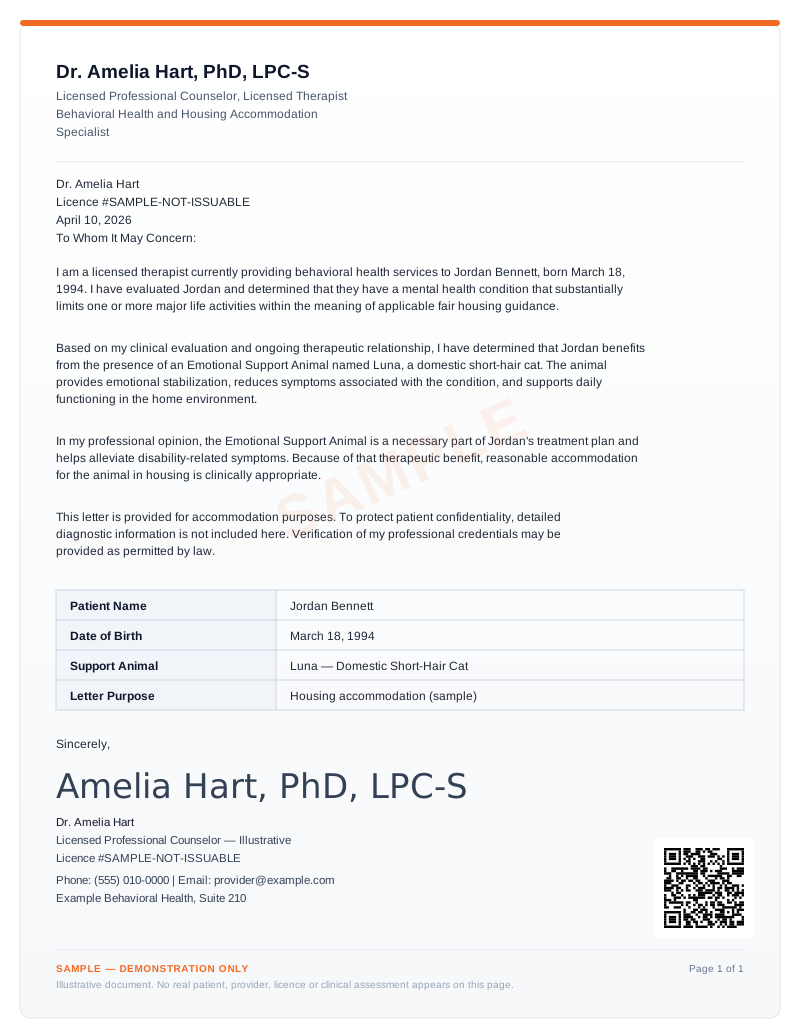
Example only — not a legal letter. Names and details are placeholders.
What landlords can still do
Your rights are real — and so are a housing provider's. Being clear about both keeps the conversation fair.
Request reliable documentation
When your disability or need is not obvious, they may ask for documentation that reasonably supports it.
Weigh genuine safety or damage concerns
In limited cases, a request can be denied if the specific animal would be a direct threat to others' health or safety, or would cause substantial physical damage — when supported by facts, not stereotypes.
Consider undue burden
A request may be denied if it would impose an undue financial or administrative burden, or fundamentally alter the provider's operations.
Enforce neutral rules
You can be held to reasonable, evenly-applied rules — responsibility for damage, leash/clean-up norms, and lawful housing procedures.
A calm response framework you can adapt
This is a plain-English outline — not a legal letter. Adapt it to your own situation, keep it polite, and never use threatening language.

Keep it written, calm, and dated — and save a copy for your records.
- 1
Open politely and reference your request
Thank them, and note that you are following up on your reasonable-accommodation request for an emotional support animal.
- 2
State the basis simply
Mention that the Fair Housing Act asks housing providers to consider reasonable accommodations for assistance animals, and that an ESA is treated differently from a pet.
- 3
Confirm your documentation
Note that you have a letter from a licensed mental health provider who evaluated you, and offer to share appropriate documentation of the disability-related need.
- 4
Ask for reconsideration
Politely ask them to reconsider, and ask for any specific concern in writing so you can address it.
- 5
Offer a path forward
Express willingness to follow reasonable, evenly-applied rules and to discuss any genuine concern.
Need updated ESA documentation?
Connect with a licensed mental health provider for a real evaluation. If you qualify, you'll receive a valid ESA letter that supports your housing request — reviewed individually, with no guarantee of landlord approval.

ESA Letter Pricing
Clear, upfront pricing — from $115
Pay by card, or choose Klarna at checkout — subject to eligibility and Klarna payment terms. A licensed provider reviews your assessment — approval is not guaranteed.
One-time
Valid for 1 year. Pay once, no auto-renewal.
- Licensed provider review
- Money-back if not approved
- Verifiable, housing-ready letter
- Free Pet Care Planner by PawTenant
Annual
Renews automatically. Save vs. one-time every year.
- Licensed provider review
- Money-back if not approved
- Verifiable, housing-ready letter
- Free Pet Care Planner by PawTenant
PawTenant also supports PSD (Psychiatric Service Dog) evaluations for qualifying individuals where clinically appropriate. PSD documentation requires disability-related task training and is different from ESA documentation.
Landlord or HOA need a separate accommodation form? See ESA packages & Reasonable Accommodation pricing.

Supporting Veterans and the Pets Who Support Them
Many veterans find that the bond with a pet brings comfort, routine, and a steadier sense of home. PawTenant’s licensed telehealth team understands how much that connection can matter — especially when housing rules add stress or uncertainty. If you’re a veteran seeking ESA housing documentation, our team is here to guide you through the process with care, privacy, and respect.
PawTenant also offers special savings for veterans and service members. Ask our support team about available veteran pricing before or during your assessment.
Frequently asked questions
Usually not on that basis alone. An assistance animal is treated differently from a pet, so a no-pets policy by itself is generally not enough to deny a valid reasonable-accommodation request under the Fair Housing Act. Each request is still reviewed individually.
Educational information, not legal advice. PawTenant provides documentation from licensed mental health professionals. We do not provide legal advice. If you face housing discrimination, we recommend consulting a tenant rights attorney or contacting HUD. Fair Housing Act protections may apply, but facts vary by situation, and a valid ESA letter supports — but does not guarantee — a landlord's approval.
Helpful next steps
Calm, step-by-step way to answer if a landlord says no or your letter is questioned.
Read moreHow to share your letter and frame a reasonable-accommodation request.
Read moreHow the Fair Housing Act protects ESA owners in covered housing.
Read moreThe 4-step process, from assessment to a provider-issued letter.
Read moreWhat HUD's 2026 enforcement update changed — and what didn't.
Read moreHow a landlord can confirm a letter is authentic, privacy-safely.
Read moreTransparent pricing and what your fee includes.
Read moreSupport animal housing rules changed in 2026
HUD's federal enforcement approach changed, but state law, housing type, Section 504, private legal rights, and individual facts may still matter. PawTenant helps customers understand their options through licensed, state-aware support-animal documentation — issued only when clinically appropriate. Rules in California may differ from the federal baseline.
Educational information only — not legal advice. PawTenant does not certify or train service animals, and approval depends on your housing provider, state law, housing type, and individual facts.